


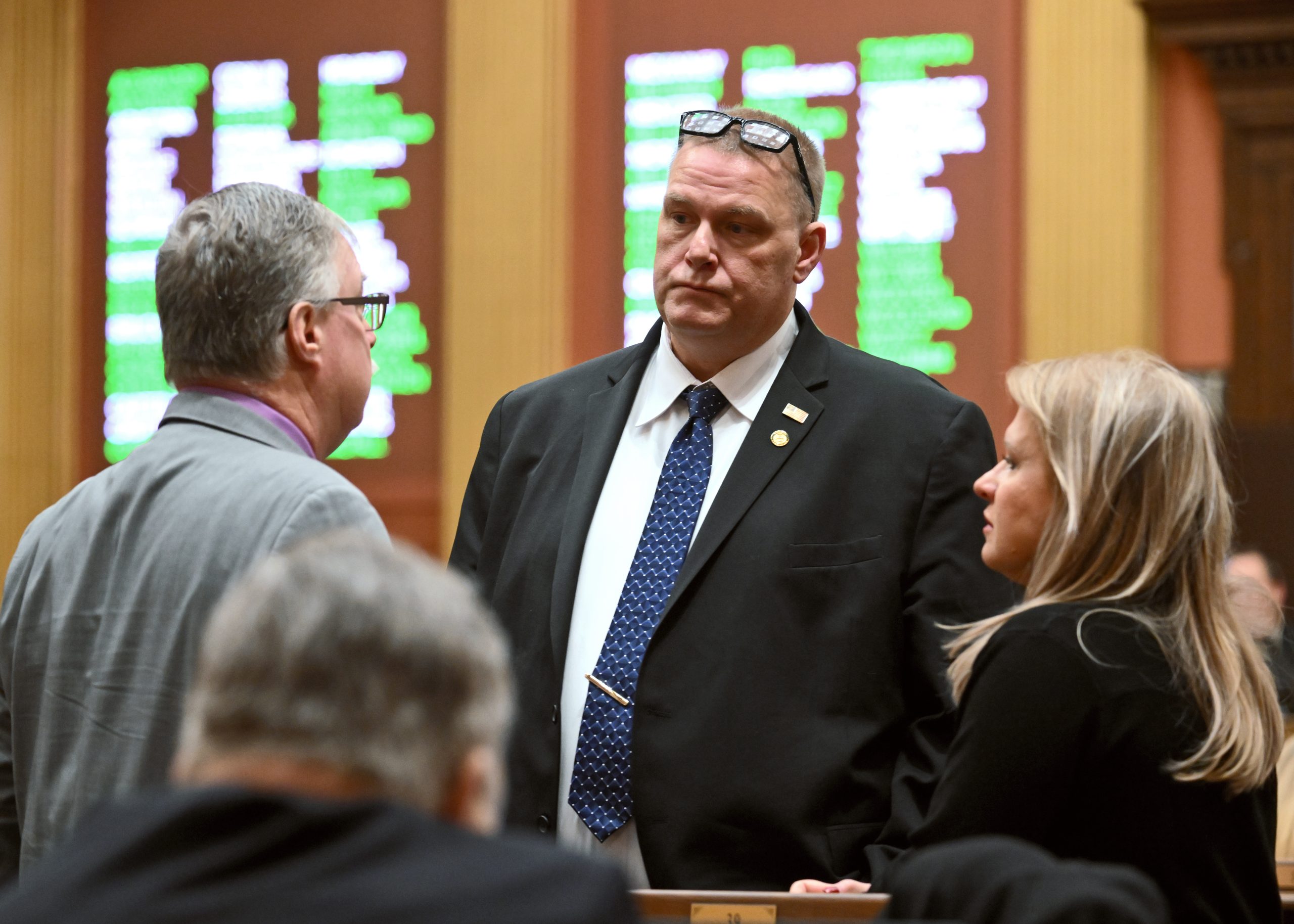
State Rep. Ron Robinson yesterday voted in support of a $75.8 billion state budget plan focused on cutting unnecessary spending, right-sizing state government, and using those savings to fund the core priorities of Michigan residents.
The House-approved budget reduces the overall state budget by $106 million and cuts nearly $600 million from the general fund while fully funding essential services like schools, public safety, and health care, all without raising taxes.
“Michigan families are watching every dollar just to get by, and Lansing should be doing the same,” said Robinson. “This budget forces state government to do exactly that. We’re cutting waste, getting spending under control, and focusing on what actually matters to the people we serve.”
A key component of the House plan is a shift toward enforcing more accurate budgeting practices within state departments. Instead of automatically increasing funding year after year, the plan aligns appropriations with real spending levels from recent years. A review of actual spending across state government found nearly half of all budget line items were overfunded, totaling close to $2 billion. Robinson said this budget corrects that practice and brings accountability back to the process.
“We’re not cutting programs people rely on out of need,” Robinson said. “We’re fixing the numbers. For years, departments have padded their budgets with money they weren’t actually spending. When you base funding on real dollar amounts instead of inflated estimates, you can fully fund core priorities without raising taxes.”
“These are intentional decisions,” Robinson said. “We’re eliminating what doesn’t make sense and reinvesting those dollars in what does. That’s how you right-size government and deliver real results.”
Highlights of the House budget include:
- Eliminating ghost employees: Building on last year’s bipartisan effort that removed more than 2,000 vacant positions, the House plan eliminates an additional 3,300 “ghost” positions – roles that are funded but not filled. The budget maintains a 2,600 FTE cushion to ensure departments can meet staffing needs and cover overtime, particularly for public safety roles like state police and corrections officers. The budget also includes a $50 million investment to hire additional investigators within the Department of Health and Human Services to crack down on fraud in Medicaid and the SNAP food assistance program.
- Reining in IT spending: The plan addresses out-of-control spending on state IT projects by consolidating oversight into a new dedicated office, improving accountability and ensuring the systems we spend tax dollars on actually work for residents.
- Boosting road funding: After last year’s bipartisan agreement added more than $2 billion in ongoing road funding, the House budget adds another $100 million to continue addressing Michigan’s road funding gap.
- Protecting and strengthening Medicaid: The House budget increases Medicaid funding by $1.2 billion to meet growing caseloads, while investing in anti-fraud efforts and implementing work requirements to ensure long-term sustainability.
- Record school funding: The plan provides a $250 per-pupil increase, bringing the foundation allowance to $10,300, while continuing universal school meals and school resource officers.
- Supporting public safety and communities: The plan includes an additional $10 million for the Public Safety Trust Fund, a $65 million increase in revenue sharing for local governments, and funding for an additional youth mental health treatment facility.
- Strengthening workforce development: Increased investment in the Going PRO Talent Fund will expand support for small businesses and workforce training programs.
- Supporting rural communities: The budget continues investments in agriculture programs and other services for rural communities, including MSU Extension and MSU AgBioResearch, Michigan Agriculture Environmental Assurance, Michigan Animal Agriculture Alliance, soil conservation districts, and county fairs.
- Protecting hunters and anglers: The House budget does not include any increases to hunting and fishing license fees, rejecting proposals from Lansing Democrats that would raise costs on Michigan outdoorsmen and women.
- Energy cost transparency: It requires the Michigan Public Service Commission to provide clear explanations to the Legislature when approving utility rate increases, helping address rising energy costs for families.
- Boosting the rainy-day fund: The House makes a $300 million deposit to strengthen Michigan’s financial stability and ensure the state is better prepared for economic downturns or unexpected emergencies without turning to tax increases.
“This is what responsible budgeting looks like,” Robinson said. “We cut the waste, protect what matters, and deliver results without asking taxpayers to pay more.”



© 2009 - 2026 Michigan House Republicans. All Rights Reserved.
This site is protected by reCAPTCHA and the Google Privacy Policy and Terms of Service apply.